Minor Arcana: Suits, Numbers & Court Cards
By Blair Andrews · Published April 19, 2026 · Updated May 10, 2026
Pick up a tarot deck and count. Seventy-eight cards total. Twenty-two belong to the Major Arcana - the archetypes, the fate cards, the ones people recognize from movies and album covers. The other fifty-six tend to get less attention. They shouldn't. Those fifty-six cards are the Cups you cry into, the Swords that keep you up at 2 a.m., the Pentacles in your bank account, and the Wands that make you quit a stable job to chase something you believe in. They are the texture of an actual life.
Most of your readings will be dominated by these cards. Most of your life is, too. The Minor Arcana covers the daily decisions, passing moods, workplace frictions, relationship conversations, and quiet internal shifts that don't feel dramatic but end up defining everything. If the Major Arcana shows you the map, the Minor Arcana shows you the road under your feet right now.

Why "Minor" Is Misleading
The term "Minor Arcana" was coined by a nineteenth-century occultist, and it has been causing confusion ever since. It implies that these cards are less important than the Majors. In practice, the opposite is often true.
Think about it this way. The Major Arcana captures the big turning-point moments - the archetypal forces, the life-reshaping crossroads. But how many turning-point moments does a person actually have in a year? A handful, at most. Meanwhile, you make hundreds of small decisions every week. You navigate dozens of emotional states. You respond to coworkers, partners, family members, and strangers in ways that gradually build the patterns the Major Arcana eventually names.
A reading stacked with Major Arcana cards says you're at a significant crossroads. A reading dominated by Minor Arcana cards says something more common and equally important: you're living your life, and the details matter. The lunch you skip. The conversation you almost start. The money you spend or save without thinking. These accumulate. They become you.
The 56 Minor Arcana cards give a reader the vocabulary to address all of it with specificity. Where a Major card might say "transformation," a Minor card can say "you're avoiding a financial conversation that needs to happen this week." Where a Major card signals "soul-level growth," a Minor card points to the argument you had on Tuesday that's still sitting in your chest. Precision is its own kind of power.

Four Suits, Four Worlds
The Minor Arcana is organized into four suits, each tied to an element and a dimension of human experience. Together they cover essentially everything a person can go through.
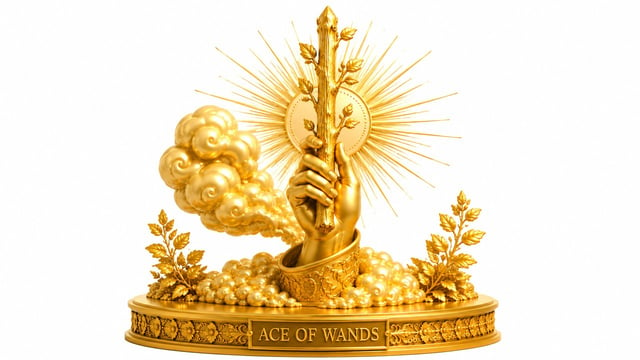
Wands belong to fire. They govern passion, creative drive, ambition, and the restless energy that makes you start things - projects, businesses, arguments, love affairs. Wands are what get you out of bed in the morning. When this suit dominates a reading, the question lives in the realm of motivation and will. The shadow side is burnout, impatience, and the kind of scattered enthusiasm that starts ten things and finishes none.
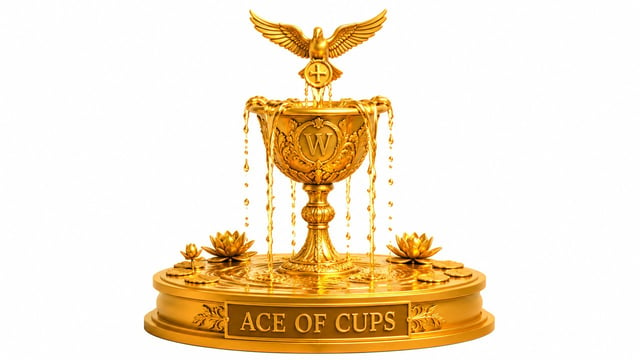
Cups belong to water. They hold the emotional world - love, grief, intuition, connection, the full range of feeling from ecstatic joy to the sadness you can't quite name. Cups address what you feel and what you need from other people. When Cups fill a reading, the heart is running the show. The shadow side is emotional overwhelm, escapism, and relationships where feeling good becomes more important than being honest.
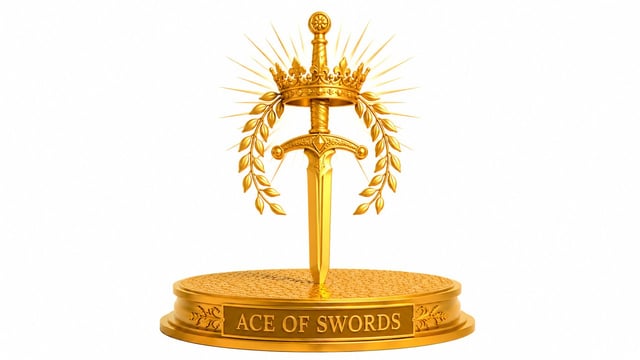
Swords belong to air. They cut through to the mental realm - beliefs, communication, analysis, and conflict. Swords deal with how you think, what you believe, and the often uncomfortable process of seeing things as they actually are. Many readers consider Swords the most difficult suit, and for good reason: clear thinking frequently hurts before it helps. The shadow side is anxiety, overthinking, cruelty disguised as honesty, and the mental loops that never resolve.
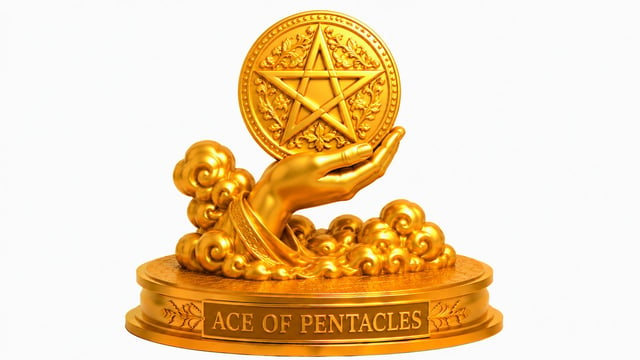
Pentacles belong to earth. They ground you in material reality - money, career, health, home, and the patient physical work of building something that lasts. Pentacles address your relationship with the tangible world and the slow, often unglamorous process of maintaining it. The shadow side is greed, rigidity, and the mistake of measuring your worth entirely by what you can count.
Notice how these suits form two complementary pairs. Wands and Pentacles occupy the material poles: fire initiates, earth receives. One starts the project; the other finishes it. Cups and Swords occupy the consciousness poles: water feels, air thinks. One senses the mood in the room; the other names it. In medieval Europe, the four suits even mapped to social classes - staffs for laborers, cups for clergy, swords for nobility, coins for merchants. The tarot's earliest designers encoded a complete picture of society into the suit structure itself.
The earliest version of these four symbols comes from the Mamluk playing cards of Egypt and Syria: polo sticks, cups, coins, and scimitars. When the cards traveled to Europe, polo sticks became batons (Europeans didn't play polo), scimitars became swords, and cups and coins stayed recognizable. Centuries later, the same four objects sit on the Magician's table in the first card of the Major Arcana - wand, cup, sword, and pentacle - representing the four fundamental powers available to every person.

The Number System: Ace Through Ten
Each suit contains ten numbered cards that tell a complete story. The Ace plants a seed. The Ten harvests whatever grew. Everything in between follows a developmental arc that's remarkably consistent across all four suits - because the numbers themselves carry meaning.
This is where tarot and numerology share a root system. Every numbered card combines two things: the element of its suit and the energy of its number. Learn the number meanings and you can read forty cards without memorizing forty separate definitions.
The Ace is pure potential. A gift arriving, an opening, a beginning that hasn't been shaped yet. The Ace of Cups is a new emotional possibility. The Ace of Pentacles is a new material opportunity. In every suit, the Ace says: something is being offered. What you do with it is up to you.
Twos introduce reflection and duality. The initial energy has met another force and must negotiate. Choices appear. Partnerships form. The Two of Swords faces a mental dilemma; the Two of Wands weighs two possible directions forward.
Threes bring growth and early expression. Momentum builds. The first tangible results appear. The Three of Cups celebrates connection; the Three of Pentacles shows people collaborating on something shared.
Fours establish structure and stability. The energy settles into a form - sometimes restful, sometimes confining. The Four of Swords is recuperation. The Four of Pentacles is holding on tight, maybe too tight. Fours pause the forward motion to consolidate what's been built.
Fives bring friction. This is the critical number in the Minor Arcana - the place where every suit meets genuine resistance. The Five of Wands erupts in chaotic competition, everybody swinging sticks in different directions. The Five of Cups stands in grief, fixated on what's been spilled. The Five of Swords wins the argument but loses the relationship. The Five of Pentacles walks through cold and hardship. All four test whether the suit's deeper qualities can survive difficulty. Most growth happens here, even though it rarely feels that way at the time.
One thing worth noting: numbers mean different things in the Major and Minor Arcana. Five in the Majors is the Hierophant - a card of inner mediation, the bridge between spirit and matter. Five in the Minors is friction, disruption, and adaptation. Seven in the Majors is the Chariot - triumph, the will overcoming obstacles. Seven in the Minors is the struggle before triumph, not triumph itself. Keep these distinctions in mind when you see the same number appear in different parts of the deck.
Sixes restore harmony. After the disruption of the Fives, balance returns. The Six of Cups offers nostalgic sweetness. The Six of Pentacles practices generosity. Sixes carry a sense of things working the way they should.
Sevens bring a deeper kind of struggle - internal, strategic, sometimes uncomfortable. The Seven of Wands forces you to defend a position against pressure from every side. The Seven of Cups spreads out glittering options - castles, jewels, snakes, veiled figures - and asks you to choose, knowing that fantasy and reality are mixed together. (In some readings, that card can be more concerning than cards that look far more dramatic. All possibility, no commitment.) The Seven of Swords moves indirectly, taking a roundabout path. The Seven of Pentacles waits, watching something grow, wondering if the effort is going to pay off.
Eights find rhythm and acceleration. The energy moves faster now, with purpose. The Eight of Wands is rapid forward motion - messages sent, plans in flight. The Eight of Pentacles is disciplined repetition, the craftsperson who improves through steady practice.
Nines reach near-completion. The suit's energy hits its peak expression. The Nine of Cups is deep satisfaction - the "wish card." The Nine of Swords is peak anxiety, the worst-case scenario playing on a loop. Nines show you the fullest possible version of what each suit can produce, for better or worse.
Tens close the cycle. Fullness, culmination, and the first stirring of something new. The Ten of Pentacles is generational wealth and legacy. The Ten of Swords is the absolute end of a painful chapter - and because it's an ending, it's also a release. Every Ten carries a seed of the next Ace inside it.

The Court Cards: People, Powers, Stages
Four court cards in each suit add sixteen more figures to the Minor Arcana. They are probably the trickiest cards in the entire deck, because they operate on multiple levels at once. A court card might represent an actual person in your life. It might describe an aspect of your own personality that's currently active. Or it might indicate a stage of development - how far you've come in mastering a particular kind of energy.
Often it's all three at the same time.
The four ranks correspond roughly to developmental stages, though these are about maturity with a specific power, not about biological age.
Pages are beginners. Think of the energy of someone around twelve or thirteen encountering something for the first time - curious, open, unfiltered, and not yet skilled enough to know what they don't know. Pages carry messages and bring news precisely because they sit at the boundary between discovery and expression. The Page of Cups feels emotions they can't yet name. The Page of Swords has discovered the thrill of ideas but hasn't learned when to stay quiet.
Knights have taken their new power out into the world and they're testing it. Picture the energy of someone in their early twenties - bold, committed, sometimes reckless, always in motion. The Knight of Wands rides with total conviction and no brakes. The Knight of Cups pursues emotional ideals with sincerity that can look heroic or painfully naive. Knights represent the stage where you've moved past discovery into action, but haven't yet learned restraint.
Queens have fully integrated their suit's energy from the inside. Receptive mastery. The Queen doesn't need to prove anything or pursue anything. She holds the power, sustains it, and lets it work through her. The Queen of Swords sees through pretense without needing to announce it. The Queen of Pentacles creates abundance through patient, grounded attention to what actually needs doing. Queens serve everyone around them because their relationship with the power is no longer about themselves.
Kings express the same mastery outward. Projective, directive, authoritative. The King of Swords wields intellectual clarity with the precision of someone who has already cut through every illusion that mattered. The King of Wands inspires action in others through the sheer force of his vision. Where the Queen draws the power inward, the King sends it out into the world.

When Pip Cards Got Pictures
For the first three hundred years of tarot's existence, the numbered Minor Arcana cards had no illustrated scenes. They were "pip" cards - suit symbols arranged on the card face the same way modern playing cards show hearts and diamonds. If you drew the Seven of Swords, you saw seven swords arranged in a pattern on a blank background. Nothing more.
Reading these cards required memorizing the numerological and elemental meanings that each number-suit combination encoded. There was no visual story to lean on. You simply had to know that a Seven combined with the Air element produced a meaning related to indirection and strategy, and then apply that to the situation at hand.
One fifteenth-century Italian deck broke this pattern. It gave every numbered card a fully illustrated scene with human figures and dramatic action. But that deck remained essentially unknown outside of a few collections for centuries. Then, in 1907, photographs of it arrived at the British Museum in London. Two years later, a young artist was commissioned to illustrate a new tarot deck. She had access to those photographs, and she drew on them.
Her innovation was to give each numbered card an allegorical scene that dramatized its numerological and elemental theme. The Five of Cups became a cloaked figure mourning three spilled cups while two full ones stand behind them. The Eight of Pentacles became a craftsman at his bench, methodically carving one coin after another. Suddenly the Minor Arcana could be read through visual intuition rather than memorized keyword systems. That deck became the worldwide standard, and almost every modern tarot deck descends from its visual language.
It's worth remembering this history when you study the Minor Arcana. The images are powerful teaching tools, but they're interpretive overlays on a numerical and elemental system that existed for centuries before any picture was painted. The numbers came first. The pictures came to help you see what the numbers already meant.

Reading the Suits as a Whole
Here's a practical principle that tends to sharpen readings immediately: when three or more cards of the same suit appear in a single spread, stop reading individual cards for a moment and read the suit. The element itself is speaking louder than any single image.
A spread flooded with Cups says the question lives in the heart. A run of Swords says the mind is working overtime - possibly to the point of exhaustion. Multiple Pentacles point to material concerns, money, health, the physical infrastructure of daily life. Wands stacked together say passion is the central theme, whether that looks like creative fire or the edge of burnout.
The absence of a suit can be just as revealing. If someone asks about their relationship and not a single Cup appears, that silence may be the most important thing in the reading. It doesn't necessarily mean emotion is absent from the situation. It might mean the real issue isn't emotional at all - it might be about power (Wands), communication (Swords), or practical logistics (Pentacles).
A reading dominated by Minor Arcana cards, with few or no Majors, suggests that the situation is concrete and actionable. You're not at a fated crossroads. You're in the middle of everyday life, making the small decisions that quietly add up to the person you're becoming. That's where most of the real work happens.

Frequently Asked Questions
What's the difference between the Minor Arcana and the Major Arcana in a reading?
The Major Arcana addresses the big archetypal forces - soul-level patterns, turning points, and the deep currents that shape who you're becoming over time. The Minor Arcana addresses how those forces play out in specific, everyday situations. A Major card might say "fundamental change is coming." A Minor card tells you it's going to show up as a difficult conversation at work on Thursday. When a reading is heavy on Majors, something significant is unfolding. When it's mostly Minors, the focus is on practical, immediate life - which is where you have the most ability to act.
Do I need to memorize all 56 Minor Arcana cards?
You really don't. Learn the four suit elements and the ten number meanings, and you can generate most card meanings yourself by combining the two. The Five of Cups is the friction number (5) applied to the emotional realm (Cups) - grief, loss, something painful in the feeling world. The Three of Pentacles is the growth number (3) applied to the material realm (Pentacles) - collaboration, building something tangible together. Once that system clicks, you're reading forty cards from a framework of fourteen core ideas rather than forty separate definitions. The court cards add another layer, but even those follow a consistent developmental logic from Page through King.
Why do tarot readers sometimes say a spread is "all Swords" like it's a warning?
Swords correspond to the element of air and the realm of thought, and they tend to carry more discomfort than the other suits. Clear thinking often means confronting things you'd rather not see. A spread full of Swords usually indicates mental stress, conflict, difficult decisions, or a period where the mind is running the show without enough input from feeling, intuition, or practical grounding. It's not inherently bad - sometimes you need a stretch of sharp clarity - but it often signals a period that's mentally exhausting.
Can I read the Minor Arcana without knowing numerology?
Absolutely. Plenty of skilled readers work entirely from the card images, their intuition, and the suit associations without ever studying number theory. But understanding even the basics of how numbers 1 through 10 carry meaning will probably deepen your readings, because the original designers built the Minor Arcana on a numerological framework. The pictures were added centuries later to illustrate what the numbers already encoded. You don't need the number system to read well, but it gives you a second layer of meaning that the images alone don't always make visible.